Supporting a reliable, affordable energy future for Victoria
Middle Hut BESS
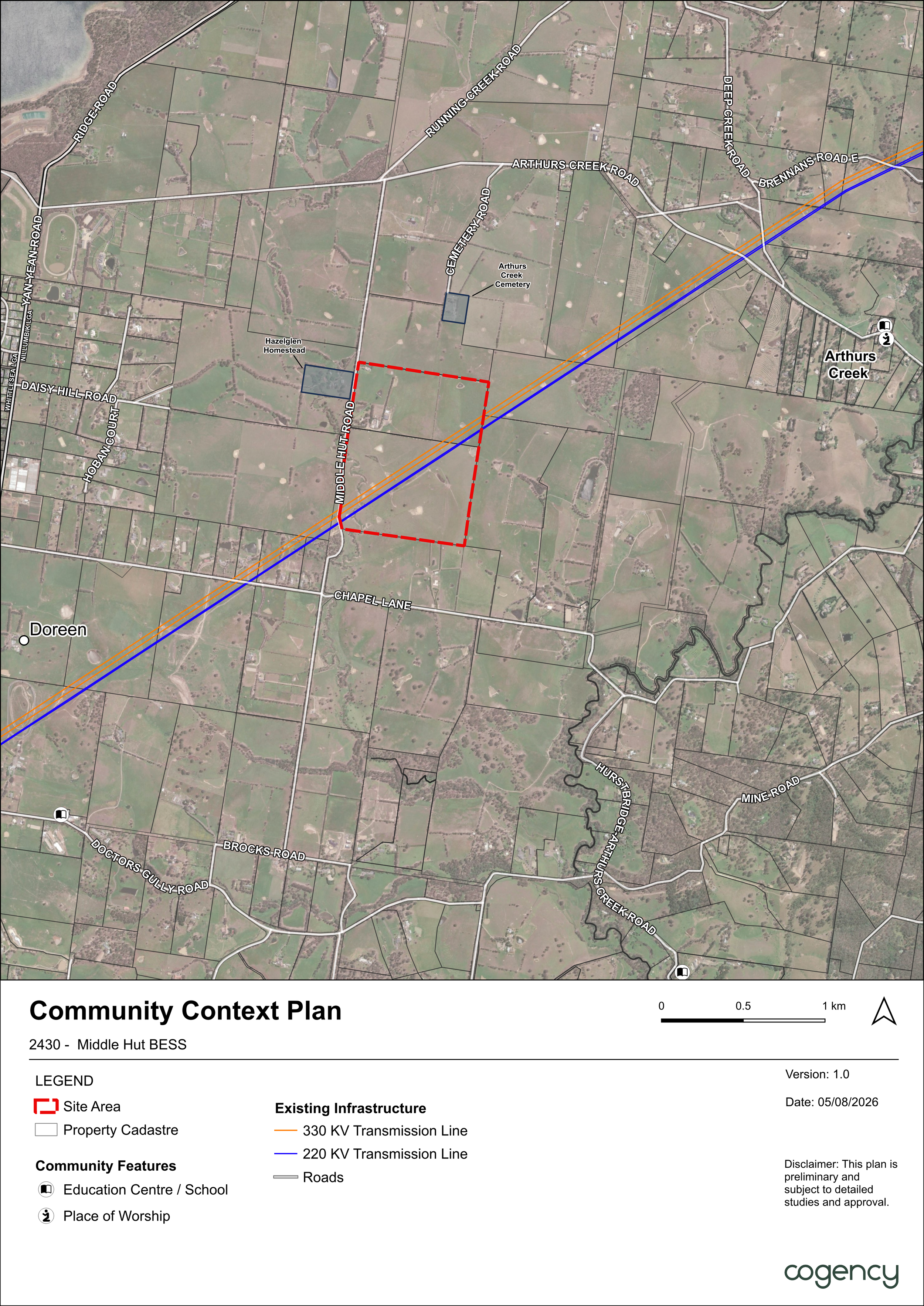
The proposed Middle Hut BESS involves the development and installation of a utility-scale lithium-ion battery, an on-site switching station, and ancillary infrastructure at 260 and 340 Middle Hut Road, Doreen.
At this stage, the size of the BESS is yet to be determined but will be approximately 290 MW / 1160 MWh.
The Middle Hut BESS is expected to connect into either the existing 330kV or 220kV transmission lines that crosses the site.
When electricity demand increases, the stored energy can be released back into the grid, helping maintain a reliable and secure electricity supply.
This project is not a data centre. No data centre is proposed as part of the project, and the project is not intended to supply power to any specific data centre.
The project will store energy and will include battery storage units, inverter stations, electrical infrastructure, internal access roads, landscaping and other associated infrastructure required for safe operation.
See the Frequently Asked Questions (FAQs) tab for more information on what a BESS is.
Extensive technical and environmental assessments have been carried out to inform the project design. Additional assessments are currently underway, and the design continues to be refined in response to their findings.
A planning application has not yet been lodged, and lodgement is anticipated towards the end of October.
Key details
Project status: Planning and approvals
Capacity: Approx. 290 MW / 1160 MWh
Development Footprint: ~14 Hectares
Infrastructure: Battery energy storage system (BESS)
Location: 260 and 340 Middle Hut Road, Doreen
Local Council: Nillumbik Shire Council
Traditional Custodians: Wurundjeri Woi Wurrung
Developers: Turnbull Renewables and BZ Renewables
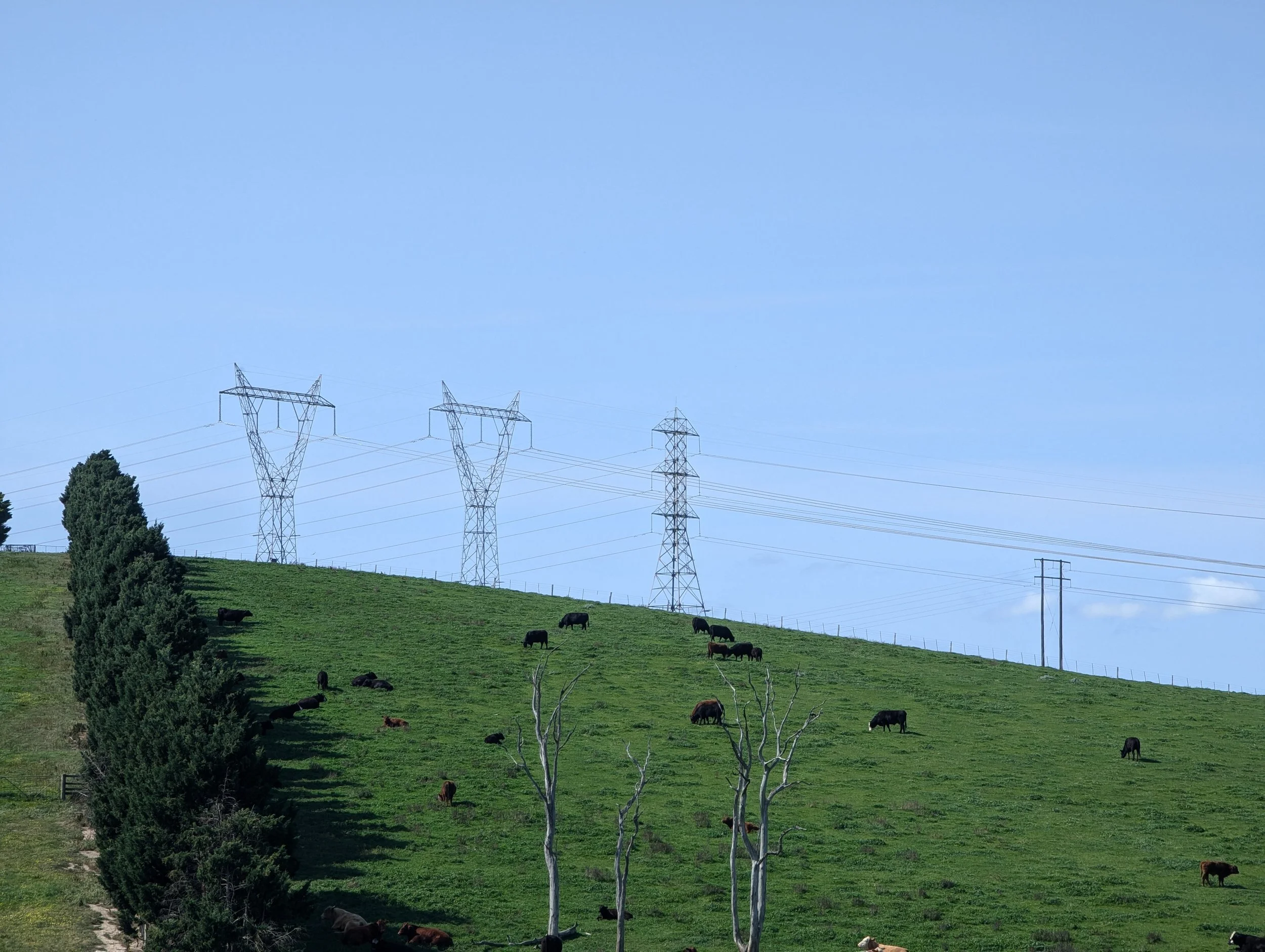
Cows grazing on a paddock in front of the existing 220kV and 330kV transmission lines
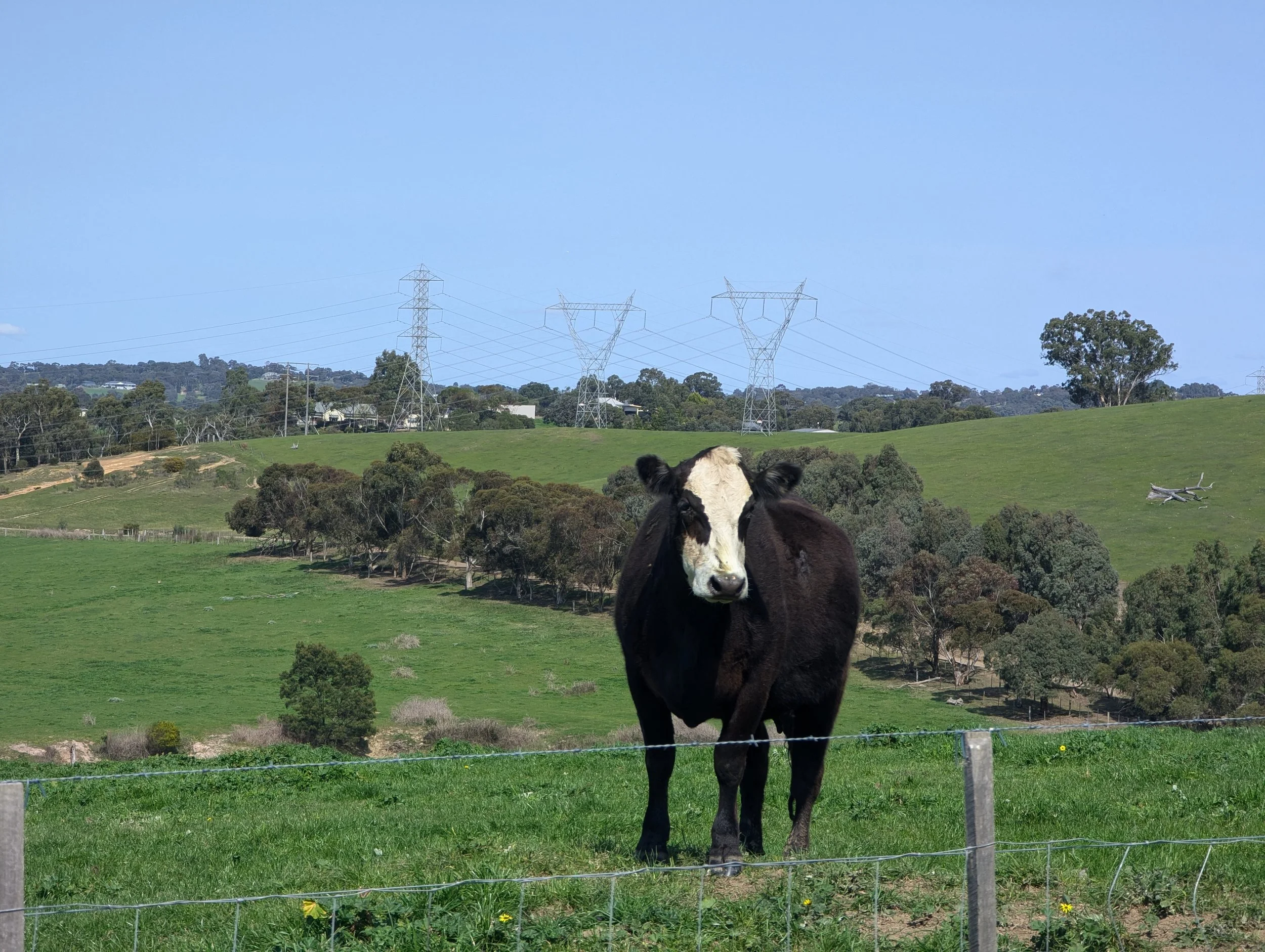
A cow standing in a paddock with the existing 220kV and 330kV transmission lines in the background
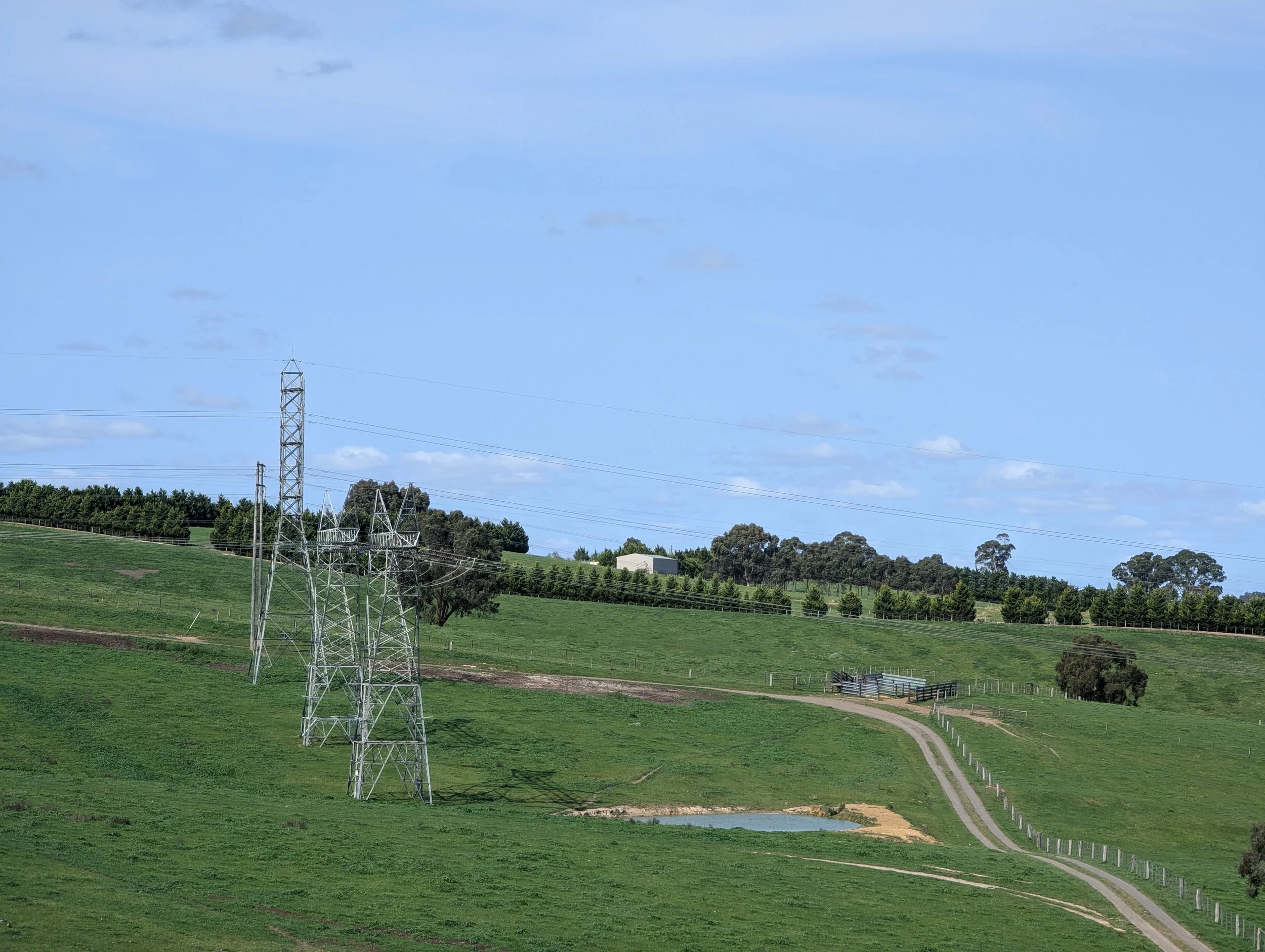
The site looking east towards the existing 220kV and 330kV transmission lines
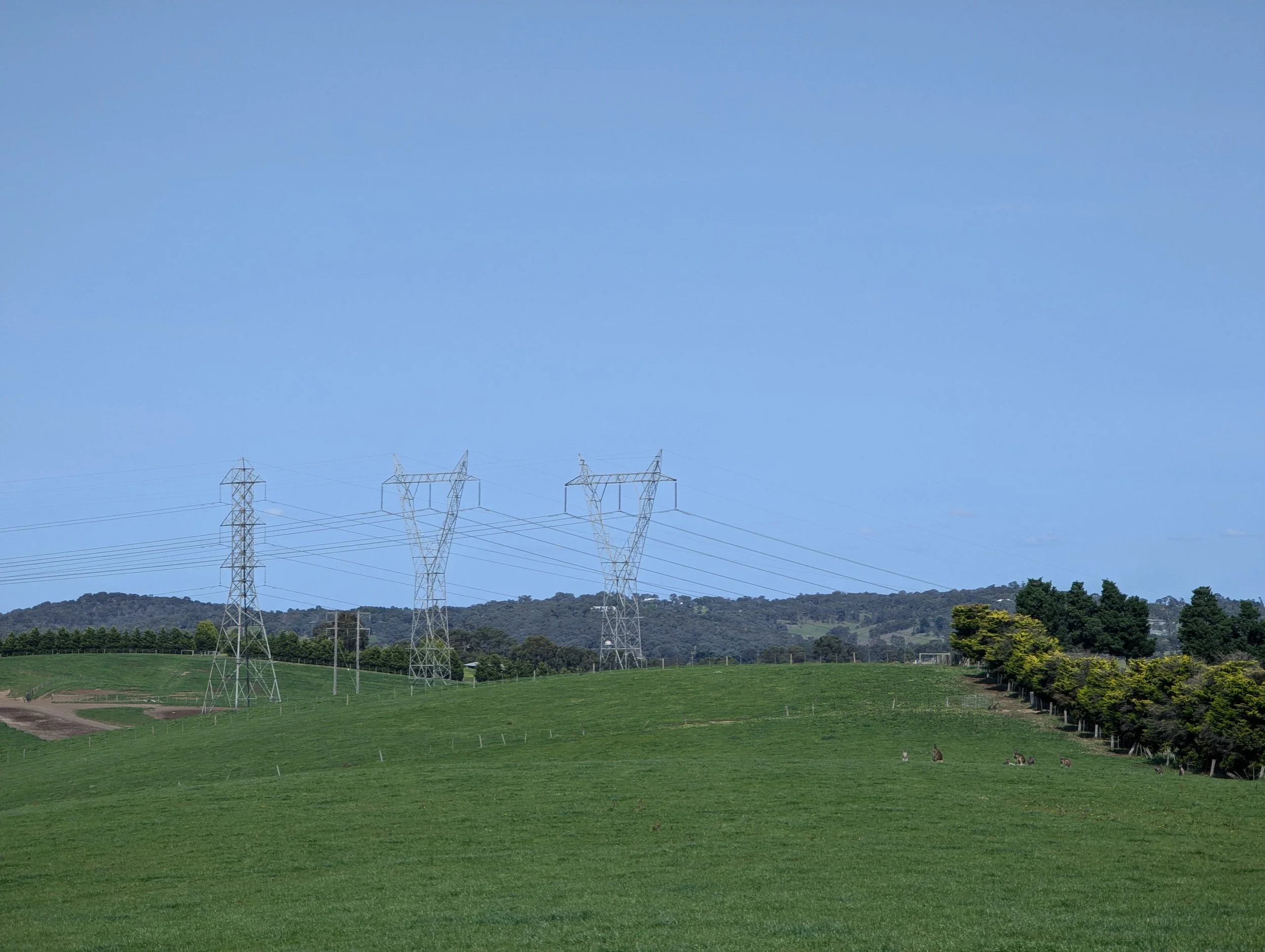
Site looking south towards the existing 220kV and 330kV transmission lines
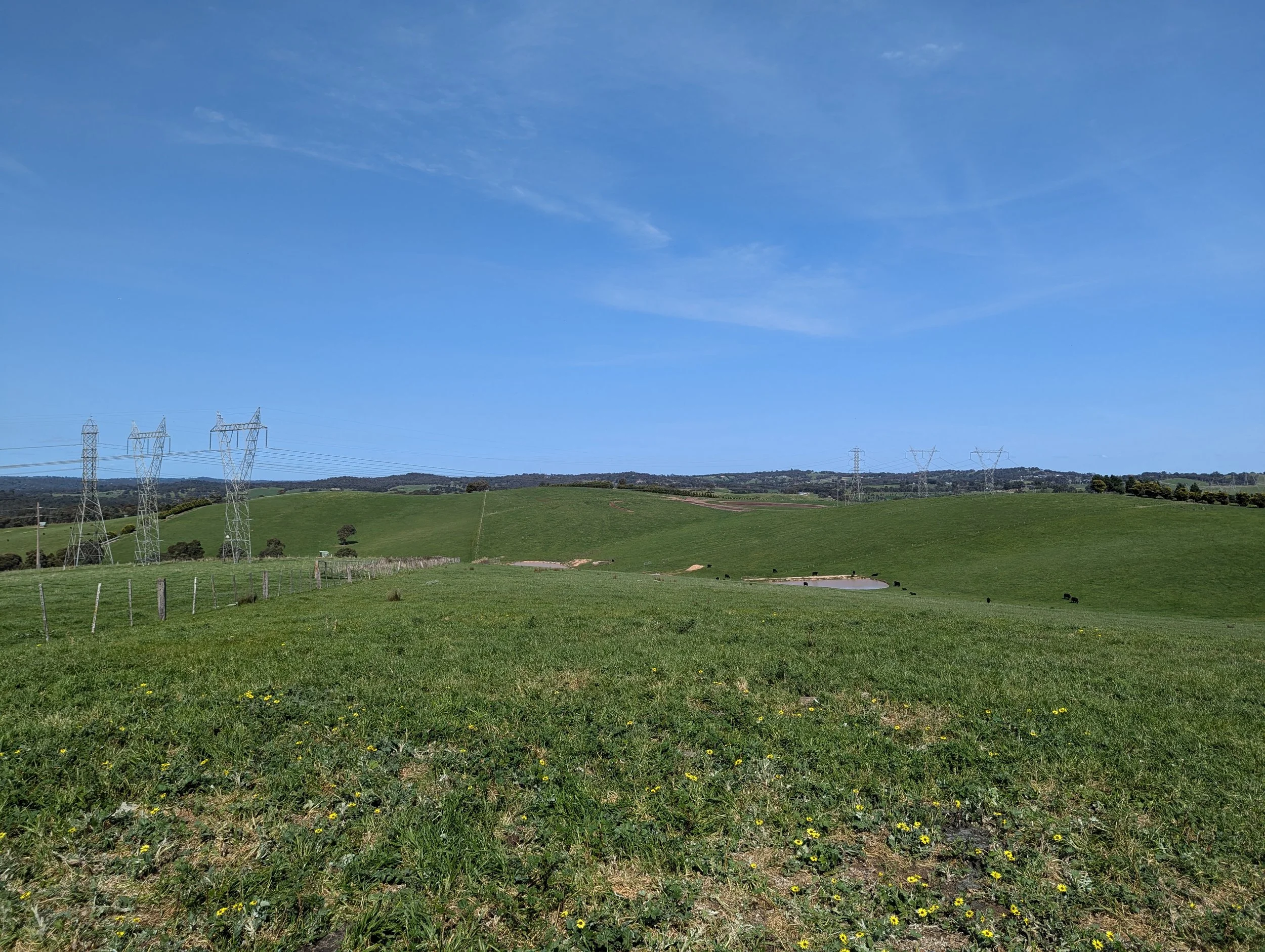
Site looking south with the existing transmission lines in the background
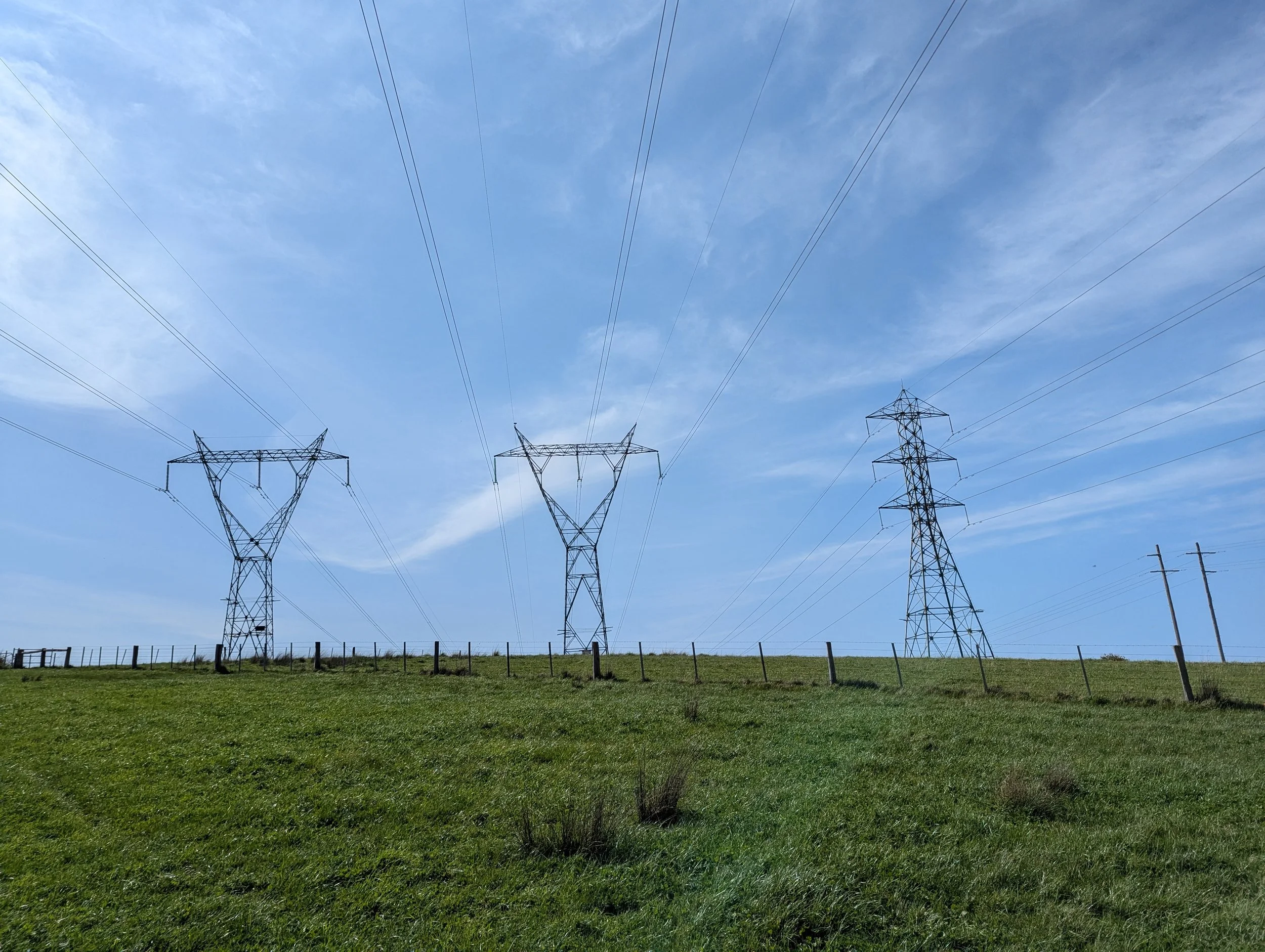
Site looking northeast directly under the existing 220kV and 330kV transmission lines
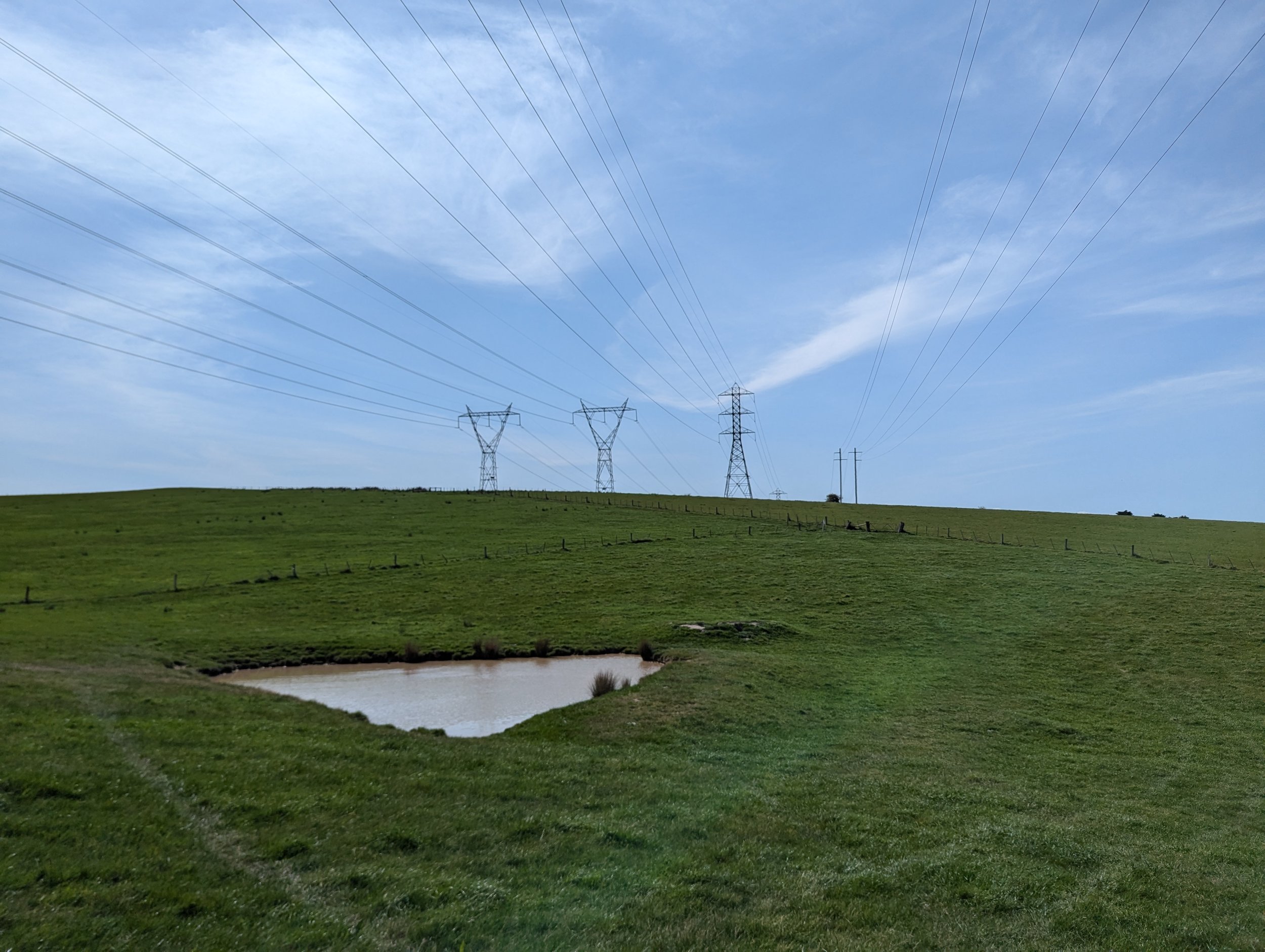
Site looking northeast towards a farming dam with the existing 220kV and 330kV transmission lines overhead
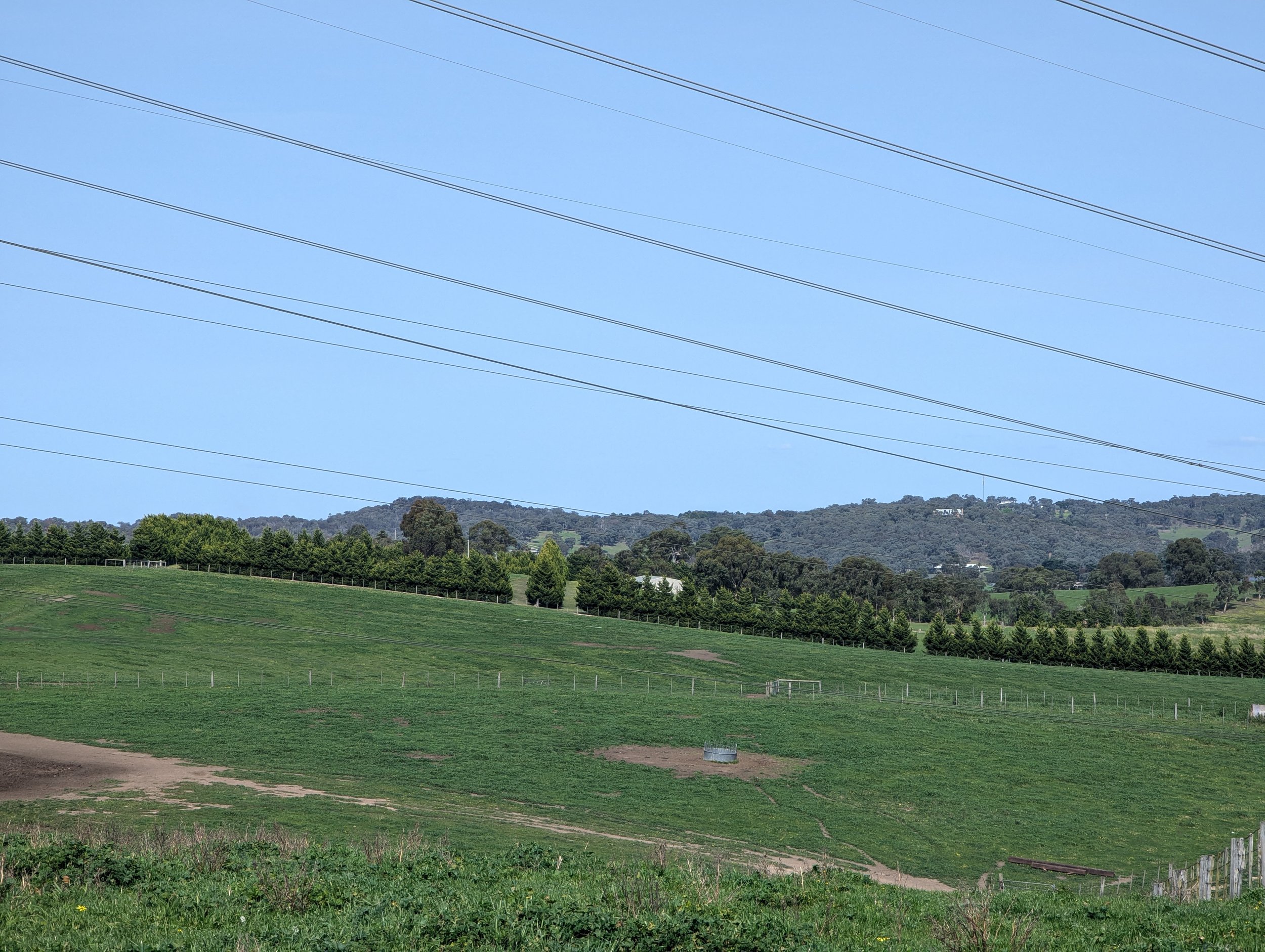
Site looking east with the existing transmission lines overhead
Why here?
The site has been strategically selected as one of the few sites along the existing high-voltage transmission lines, with suitable environmental conditions, within proximity of Melbourne.
Located approximately 30 km northeast of Melbourne's CBD, the site has been strategically selected to store and dispatch energy to metropolitan Melbourne. This site is one of the only parcels of land that sits as close as possible to Melbourne - Victoria’s major electricity use centre.
Siting the battery here avoids the need for new transmission lines through a connection directly to the existing 220kV line which bisects the site. This reduces the environmental and visual impact of the project as no new overground transmission lines will need to be constructed.
The site is also strategically located away from the main residential portion of Doreen.
Upcoming Opportunities
Formal Submissions
Once the application is officially lodged, the Department of Transport and Planning will open a formal submission period. This will be your opportunity to submit formal feedback for the Minister for Planning to consider during the decision-making process.
During this public exhibition period, all project plans and specialist environmental, visual, and acoustic assessments will be made available for review. We will update this website and notify the community when the exhibition period begins, providing direct instructions on how to lodge your submission.
Community Benefits


~ $290M
100–160
Total capital investment
Construction jobs created


18–24 Months
60-100
Estimated construction timeline
Peak on-site workforce

2–3 FTE
Permanent operational roles
Infrastructure of this scale should deliver tangible benefits to the community that hosts it.
We want to hear from the community about what meaningful benefits look like for Nillumbik.
Community benefit options may include local employment and apprenticeships during construction, community fund contributions, energy bill relief programs, or investment in local environmental projects aligned with the Biodiversity Strategy.
We will be working with the community, the Nillumbik Shire Council and the Registered Aboriginal Party for this area, the Wurundjeri Woi Wurrung Cultural Heritage Aboriginal Corporation (WWCHAC) to co-design a Community Benefit Program that reflects local priorities and delivers meaningful, long-term outcomes for the area.
Any community benefit commitments will be formalised and reported on publicly.